
This article by David Morgan was originally posted on April 27, 2025 by insidecroydon
The Sir Philip Game Centre in Addiscombe is a ground-breaking experiment in crime prevention which has provided access to a range of activities for thousands of youngsters since it opened.
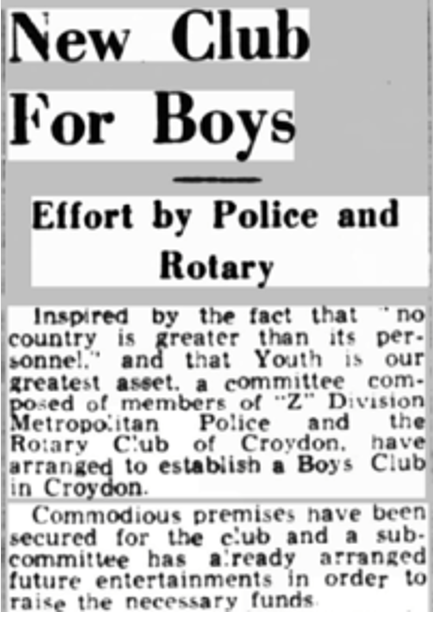
“No country is greater than its personnel. Youth is our greatest asset.” These were two of the conclusions from a committee which met in 1944, worried about the boys in Croydon and what sort of men they would grow into. The same sentiment is probably held by many today. The committee back then was comprised of members of Z Division of the Metropolitan Police and the Rotary Club of Croydon. The outcome of the meeting was that they decided that Croydon needed a boys’ club.
The committee was chaired by Superintendent David Deller, who had been appointed to take charge of Z Division the previous year. He had had a meeting in Croydon soon after he took up his post with Sir Philip Game, the Commissioner of the Metropolitan Police. Sir Philip, who had ended the First World War as Air Vice-Marshal of the newly-formed Royal Air Force before being appointed Governor of New South Wales, had been interested in youth work for most of his life, with a close association to the Scouts movement.
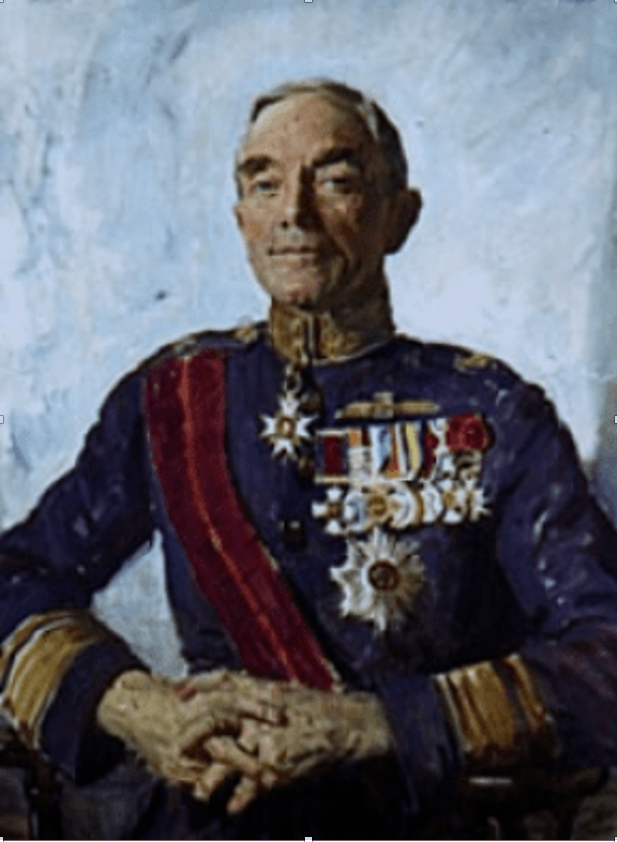
Sir Philip Game had returned from Australia in 1935, to take up the position as Commissioner of the Metropolitan Police. As a response to police concerns about the welfare of young people, Sir Philip wanted them to get involved in schemes which would make a real difference to their lives. Boys’ clubs weren’t a new idea but the Commissioner suggested to Deller that Croydon would be an ideal place to host this sort of project.
Deller and the committee members realised that there could be no single approach to the many problems faced by youngsters, many of whom had been evacuated to the countryside in the early months of World War II, and would soon be returning to a Croydon that had been hard-hit by the Blitz and other deprivations of the global conflict. The committee planned to give each boy who attended their club a spirit of self-reliance, a breadth of vision and an adaptability to face new and varied circumstances. A property on Morland Avenue in Addiscombe was identified and bought. Sir Philip allowed Deller to use his name for the title of the club.
Two years later, at the annual general meeting of the club held in the Town Hall, Sir Philip warmly commended the people of Croydon for the time and money they had given to help the boys and also the Croydon Police for all the work they had put in to make the club a success. Sir Maurice Drummond, the Deputy Commissioner of the Met, spoke of the great interest which Scotland Yard were taking in the project. He presented a cheque to the club for £122 8s (worth more than £6,000 in today’s money), which was raised at a boxing contest held by members of Z Division.
The 1950 AGM of the club shared the news of another successful year. The secretary of the club, a Mr Edmunds, spoke about the club’s reputation for high standards in training and tuition in sport, social work and handicrafts. Deller told the meeting that a new gymnasium was urgently needed. He had meetings with architects and plans were being drawn up. A target fund of £5,000 was set. The club’s fundraising events were something special.
On September 30 1951 a truly spectacular line-up was planned for a show at the Croydon Empire. Those who agreed to appear were some of the biggest showbiz names in Britain: Tommy Trinder, Jack Warner, Julie Andrews, Winifred Attwell, Diana Dors. The compere was Ralph Reader. The amount of money to build the gym was raised and Lord Louis Mountbatten opened it in early 1952. He told the club that when he heard that they were adopting a tanker called London Pride, he spoke with Noel Coward to see if he would allow the boys to use his well-known song as their club tune. Coward sent the club a copy of the music and gave full permission for its use. At their show, All Hands on Deck, the song was used as a main feature of the programme.
Throughout the 1950s, these super fundraising concerts continued. In 1953, Streatham Hill Theatre hosted the event, with Michael Bentine and Bob Monkhouse (who lived in the area at the time) the star comedians, together with a burst of Cross Hand Boogie from pianist Winifred Atwell. With tickets on sale from Norbury and Croydon police stations, audiences would flock from across London.
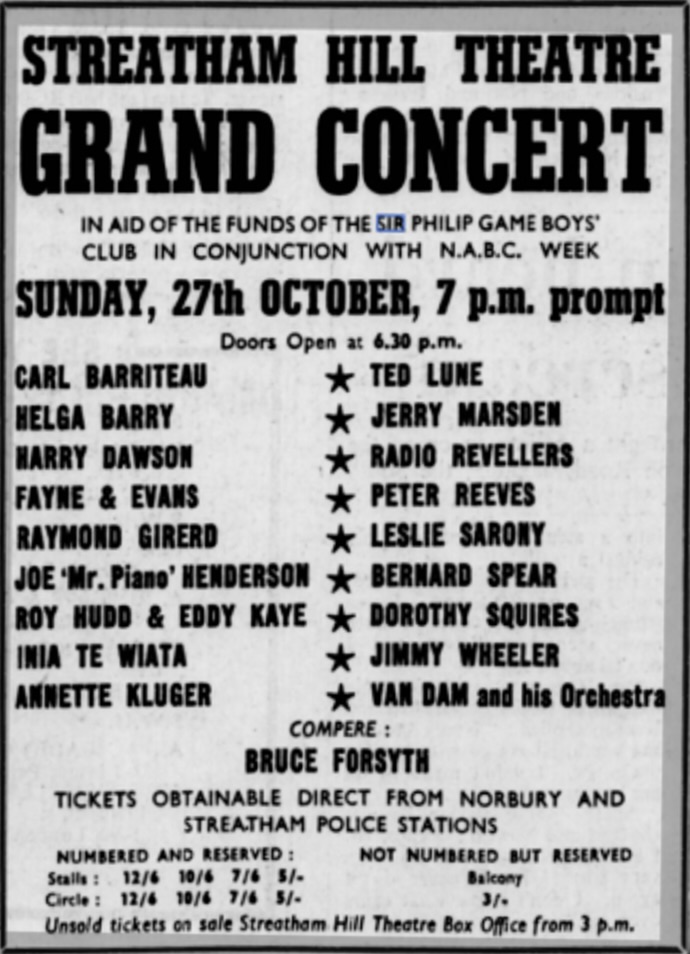
Four years later, the fundraising show for the club featured the first professional appearance of one of Britain’s best-loved comedians and actors, Croydon-born Roy Hudd. On this occasion, he worked with a childhood friend Eddie Cunningham, the two of them being billed as “The Peculiar Pair”.
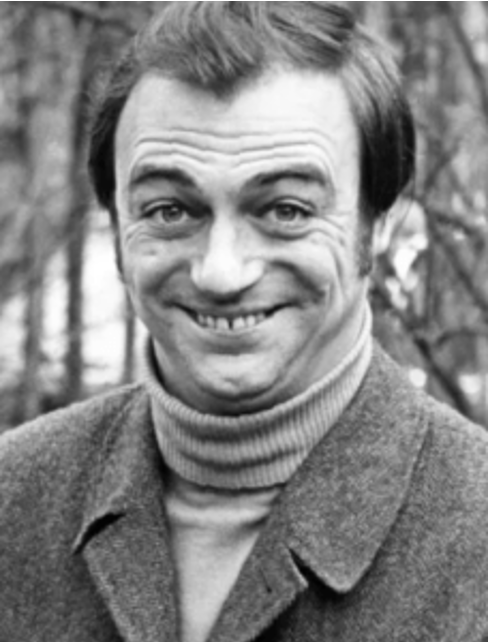
That Hudd came to appear on that bill was quite a story. In 1951, he had walked into the Croydon boys’ club to join in with their activities programme. Hudd signed up to the table tennis sessions, intent on becoming a ping pong champion. The leader of the club at that point was John Rourke. He always insisted that the boys attended more than one activity, so Hudd was encouraged to go to the concert party sessions. From that point on, Hudd became a part of the club’s successful shows, described as “spectaculars of song, dance and laughter”. It was while he was doing these shows that Hudd developed a taste for comedy which was to set him on a path to stardom. In his later years, Hudd would say: “It was only when I joined the club in Croydon and they persuaded me to try something else other than table tennis that I decided there might be something in the show business line after all.” In 1958, a year after their first performance, Hudd and his friend Eddie, now using the second name Kaye, got jobs as redcoats at Butlins in Clacton, where they honed their acts entertaining the holiday-makers, and also got to earn some much-needed cash.
The club was so successful that it began to attract attention from across the world. The idea of a police force taking proactive action to prevent unlawful or antisocial behaviour led to a Greek police chief making the journey from Athens to see for himself how the club worked before setting up an identical club in his home city.
Many achievements by members of the Sir Philip Game Centre were documented and celebrated. In 1957, the first boy from their judo club achieved a coveted black belt. Peter Ives, 17, from Thornton Heath, had spent five years training under the club’s chief judo coach Harry Harding. He received his award from Kenshiro Abbe, a Japanese judo champion and Britain’s national coach. At that same presentation evening, an award was given for “the outstanding boy” of the club. This went to 17-year-old Brian Friend of Rees Gardens. He had gained his County colours for football and represented the club at cricket. Sportsman of the year was Ken Thompson, of Addiscombe Court Road. He was an apprentice engineer who was also an excellent boxer. He was a finalist in the National Boys’ Clubs Boxing Championships that year.
Boxing played a huge part in the club’s history. In 1977, Frank Bruno, when aged 15, started a three-year association with the boxing club. Other future champions who represented the club include Frankie Lucas, who would go on to become a British middleweight champion, and Duke McKenzie, who remarkably would win world titles in three different weight categories. Today, McKenzie still runs his own DukeBox gym in South Croydon.

Frankie Lucas’ story is a fascinating one. In 1973, Lucas won the Amateur Boxing Association middleweight title, but controversially he was overlooked by the England selectors for their Commonwealth Games team. One of the police officers connected with the Philip Game club, Ken Rimington, knew Lucas well. Rimington remembered that he had been born on the Caribbean island of St Vincent, a part of the Commonwealth. So Rimington set about creating a St Vincent and the Grenadines Boxing Association just so that Lucas could go to the Games, representing the country of his birth. In early 1974, Lucas duly got his air tickets for Christchurch, New Zealand, where in the middleweight semi-final he faced Carl Speare, the Liverpudlian whom he had beaten in the ABA final the previous year. And just as he had done at the ABAs, Lucas duly won his bout against Speare. Croydon’s Lucas was now guaranteed at least the silver medal, but he made sure of gold when he won the final against Julius Luipa, from Zambia, with a second-round knock-out. It was the first Commonwealth Games gold medal ever won for St Vincent.
“Belonging to a club teaches self-discipline.” This was the line taken by the senior officers in the Met Police. It certainly worked for the many thousands of boys who passed through the club doors in Morland Avenue. Many changes have happened since those early days, including extending its services to girls, but there are still youth groups (such as the Solid Rock Academy) who use the SPG Centre premises now, as well as it being home to the Croydon Judo Club.
In case anybody has forgotten, young people are our greatest asset. Are we still investing?
David Morgan, pictured, is a former Croydon headteacher, now the volunteer education officer at Croydon Minster who offers tours or illustrated talks on the history around the Minster for local community groups.
 East Croydon Community Organisation