

A Hypothesis by Roger Wagner, 2023
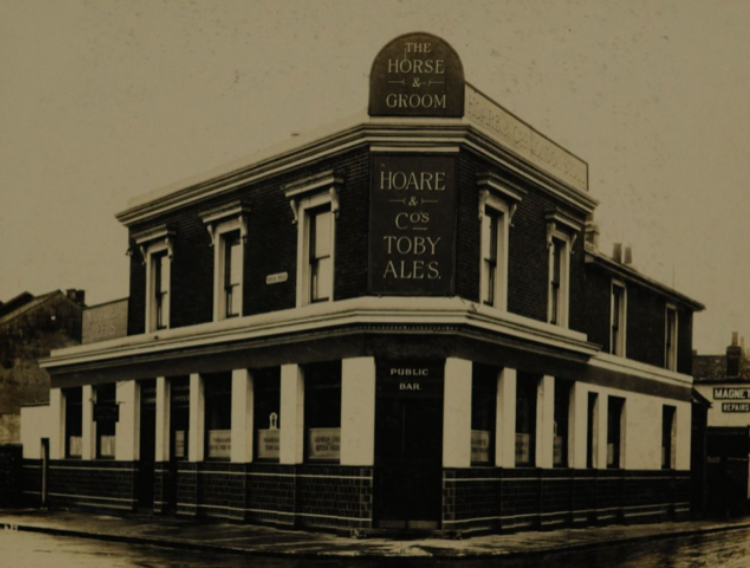
Croydon – specifically East Croydon – is the original ‘home of IPA’. Not the place it was brewed. Not the first place it was tasted even. But the place its intended market – officers of the East India Company – first learned to savour its delights. And the precise location this event happened between 1835 and 1859 was the pub known as The Horse & Groom. When it closed in 2017 it was known as ‘The Glamorgan’ (having previously changed its name to The Grouse and Claret 1993-2006). The pub the SaveTheGlam Campaign with the aid of the Croydon Plan (2018) has so far managed to save from the brutal greed of ‘the developer’. If we lost this pub to the relentless impulses of the money men to reduce everywhere to KFC-town-anywhere, one more fragment of Croydon’s singular identity would be lost forever. And we’d lose a damn good beer cellar.
The Origin of IPA
India Pale Ale, a British hopped ale produced by the native process of top-fermentation, in contrast the ‘world beer style’ lager based on the Czech pilsner process of bottom-fermentation, was invented to fulfil a specific need. Croydon was the gateway to the Indian market it would eventually satisfy. Curious eh?
Today IPA is a world style of beer. Self-respecting brewers across the globe will include at least one IPA in their repertoire. The CAMRA Beer Guide in 2023 lists over 30 styles of beer of which three are IPAs. They are distinct from other ‘golden’ or ‘pale’ beers because they are ‘hoppier’. In other words the preservative/flavouring element ‘hops’ is prominent. It is even possible to have a ‘black IPA’ – brown or black but the ‘hops’ are always forward in the taste. US enthusiast Beer Connoisseur lists a huge number of variants, including ironically English IPA ‘a quite rare style on this side of the Atlantic’.
IPA originated in England. Nowhere else. Before about 1810 there were English ‘pale ales’ but no brew designated an India Pale Ale. Like all beers at the time they were ‘real ales’ – they were ‘live’ like good French wines. The yeast which turns the remaining sugars in fermented barley into alcohol were ‘working’ while the brew was at rest. The hops flavoured and ‘preserved’ the results. Pale ales by 1800 were savoured by the ‘upper classes’, partly because they were seen as ‘classier’. The ‘labouring classes’ drank dark ales such as ‘Mild’. ‘Porter’, ‘Stout’ out of cheap opaque pewter tankards. Pale ales sparkled in the light, especially quaffed from a glass as if they were wine or spirit. The gentry migrated towards Pale Ales and even brewed them in their own estate brew houses. The hoppier Pales might be accorded the classification ‘October Ale’ in order to associate with the autumn festival beers brewed in the Holy Roman Empire – what we think of today as Germany and Austria. October Ales were hoppier generally because they were fermented over longer periods so needed the extra preservative advantage afforded by the hops.
A brewer might experiment with recipes in any number of ways, for many reasons. But to arrive at an ‘October-type’ called an ‘India Pale Ale’ we need another element – India.
Famously when CAMRA began in 1971 the London brewer Courage used to brew a celebrated black long-fermented ‘Imperial Russian Stout’ (9% alcohol) . Brewed since the late 18th century the style was originally for export in the Baltic trade. The commercial tag was that it was brewed to meet the refined German tastes of Empress Catherine ‘the Great’ (reigned 1762-96) in St Petersburg. Still available today brewed in Bedford by Eagle, the beer is ‘Russian’ because of its original destination. The style is another in the portmanteau of English beers which have animated the beer drinkers of the planet. India Pale Ale arose in a similar way. India was its celebrated destination, to be drunk by the lads of ‘John Company’. Well the ‘white’ lads. Plenty of porters were shipped to India for the East India Company’s ‘white’ officers, but pale ales were ‘classier’.

The East India Company & Croydon
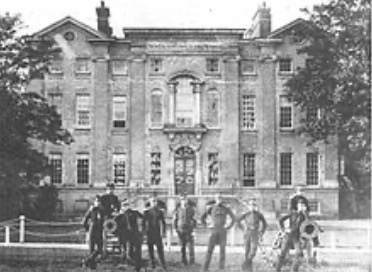
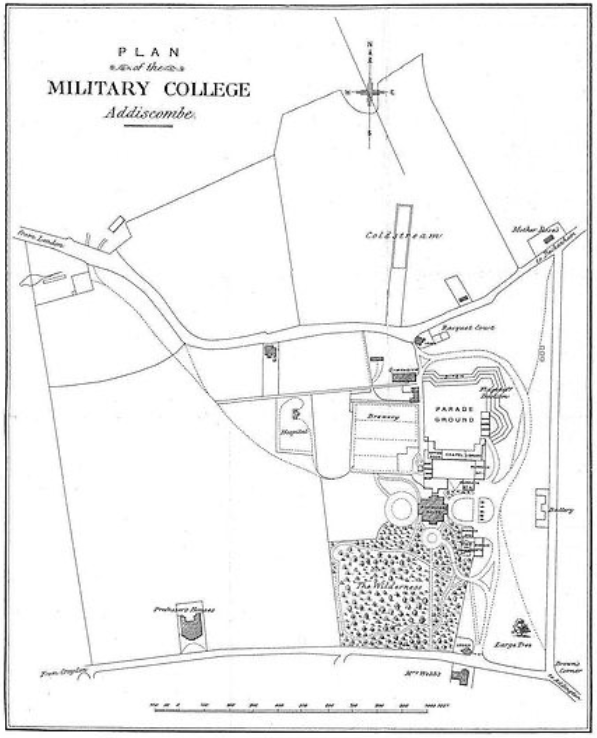
Croydon has a unique and largely forgotten connection with south Asia through a lost elegant mansion called Addiscombe House (demolished 1861) which lay to the east of the town centre on the by-ways that led east to Beckenham and West Wickham.
The English monopoly East India Company – ‘John Company’ – was famously chartered in 1600 by Queen Elizabeth I to trade with ‘The Indies’ – Iran through to Indonesia. Using its private army, by 1859 when Queen Victoria became Empress of India and the Company’s territories were added to the British Empire, the East India Company had pretty much conquered India. Beer of course, was not the focus of the trade but an important lubricant of the Company’s power projection into the sub-continent. The Company’s private army – bigger than the contemporary British Army at 260,000 men – was composed of local ‘sepoys’. In the Indian Mutiny 1857 they rose against their masters in the First Indian War of Independence, and the Company’s rule ended. But Company officers were recruited from the home country – ‘white European’ ‘masters’ – aspiring gentlemen.
Cadet families paid £300 a time to put them through a military education and make them ‘officers and gentlemen’. And after 1809 they were trained at the Company’s military academy in East Croydon, specifically Addiscombe House which once lay between Addiscombe Road and Blackhorse Lane (now Lower Addiscombe Road). The Glamorgan – for most of its history The Horse & Groom – was built in 1835 just beyond the western (private) access to the Company’s military academy.
The creation of an ‘October Ale’ which could be transported in the hold of a sailing ship from London Docks round the far reaches of the Cape of Storms (the Cape of Good Hope at the southern tip of Africa) all the way to Kolkata (Calcutta, the HQ of the East India Company after 1773) was sponsored by the Company. Pete Brown lays out the fascinating story of how in our century he sponsored the brewing of a pin of IPA to an authentic 200-year old recipe, then took it by sea – partly by sailing ship – to Kolkata to see whether it was still drinkable in his 2009 book Hops and Glory: one man’s search for the beer that built the British Empire. And indeed it was!
The Company had a problem at the time it bought Addiscombe House in 1809. Britain was struggling for world supremacy against Napoleonic France. European markets were closed and France’s ambition to revive her former empire in India was signalled by Napoleon’s (failed) invasion of Egypt in 1799. The army of the East India Company had succeeded in excluding France from India once, but its army was perceived to have a potential weakness.
Its European officers officers were inclined to be drunkards. They succumbed readily to the local spirits, particularly arak – distilled spirit of anise, related to raki and absinthe. If only young officers could be seduced into preferring good English pale ale before embarking for India, perhaps theycould be proofed against stronger spirits. Porter was exported to India as early as the 1780s. But porter did not have the cachet of the genteel pale ale. Experimental voyages to India carrying a strongly hopped October Ale proved it was a viable strategy. As Pete Brown entertainingly demonstrates, it arrived ‘drinkable’. East London brewers by the docks successfully shipped their pale ales to India from the 1780s. When authoritarian Russia became hostile and closed the Baltic trade to Britain in 1822 this trade took on increasing importance
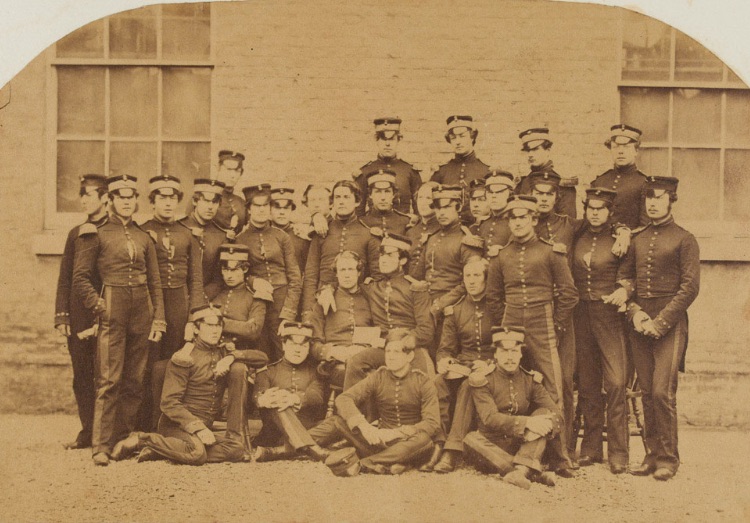
Company cadets were forbidden the delights of Croydon taverns for the most part, as you would expect. Addiscombe Military Academy had its own brew house for the young gentlemen. But the rules were mighty difficult to enforce. What could be done?
Stephen Rose and The Horse & Groom (later The Glamorgan)
The Horse & Groom lay on the way from the west (private) access of Addiscombe Military Academy towards Croydon Town. Stephen Rose was the first recorded publican of The Horse & Groom at the junction of Cross Road and Cherry Orchard Road in 1839 and in four decades thereafter (the last record is 1867, after the military academy was closed). His pub lay coincidentally adjacent to a blacksmith’s shop. My guess is that during the governorship of Ephraim Stannus, The Horse & Groom became part of the East India Company’s strategy to socialise its cadets into drinking ‘classy’ IPA and anaesthetise them in their future postings against the temptations of arak and other strong spirits. The link is through a local character, ‘Mother Rose’.
In March this year Cambridge/Yale historian Kate Birbeck published the first book – a lavishly illustrated and exhaustive study – dedicated to the history of the East India Company’s training facility in East Croydon, Addiscombe Military College and the Cadets who Forged an Empire (2023). I am sincerely in her debt, for what follows. And also to one of her sources, Alan Hardcastle, who has donated his 1991 notes and manuscript for a history of the institution to the Croydon Local Archive, ‘In Company & In India’.
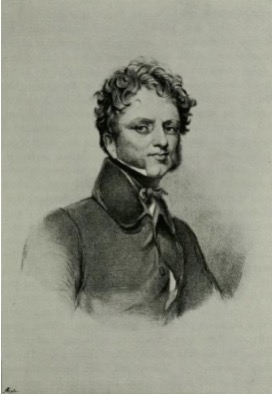
In 1834 Addiscombe Military Academy gained a new Lieutenant-Governor, Ephraim Stannus, its second. He came from the Anglo-Irish aristocracy, like Arthur Wellesley, Duke of Wellington. He shipped to India in 1799 and Stannus was knighted in 1837. After long service with the Company, this was to be his last posting – he died of a heart attack in 1850. He was a quick tempered but worldly man, beloved of the cadets. In the face of widespread back-sliding he subtly relaxed the rules. Cadets were forbidden to go to pubs except The Beehive at Woodside Green, which was beyond the north public gate safely away from Croydon Town. Exceptions were made however for older cadets, the ‘Browns’ and the ‘Olds’. On their way north from the academy the cadets were accustomed to taking time at the clapboard cottage of ‘Mother Rose’ in Blackhorse Lane (now Lower Addiscombe Road). She provided a host of services – bread, butter, eggs, milk, tobacco – and she would clean their kit. In summer they would sit outside smoking. They held her in some affection. ’Mother Rose’ kept order with a cane and would not permit any bad language or rowdiness.
Who was ‘Mother Rose’? She was Dorcas (some sources render her name as Dorcus) Letts, born in Coulsdon in 1809. She was wife of a ‘farm labourer’ John Rose. John Rose died in 1864 and is buried at St James’s, along the extension of Blackhorse Lane west towards Croydon (which became St James’s Road). Dorcas – ‘Mother Rose’ – then had to give up the cottage and spent the rest of her life in Wallington, homed in St Mary’s Almshouses. She died in 1894 and was buried at St Mary’s in Beddington. It is my hunch that the Stephen Rose who was the first licensee of The Horse & Groom was related to her husband John, and served India Ale to his young guests. Perhaps he was John’s brother?
The former Horse and Groom lies across the road from the entrance to a footpath leading from Cherry Orchard Road to Oval Road. This may be the remnant of a path that led to the brewery yard of the East India Company Military Academy. This path is mentioned and being stopped up during the enclosure of Croydon Common, but its use may have persisted https://eastcrocomm.wordpress.com/wp-admin/post.php?post=19465&action=edit
‘Mother Rose’ was indelibly linked with beer in the mind of at least one cadet. For George Brown, gave an illustrated poem to ‘Mother Rose’ recording that he ‘departed this life’ (likely was absorbed into Her Majesty’s Army with the rest of the Company’s forces) on ‘February 4th AD 1859’. ‘This life’ was inscribed on a beer barrel belonging to the London brewer ’Henry Meux’ recalling ‘Good Old Times’. Kate Birbeck uses it on the cover of her study. Certainly George Brown for one associated ‘Good Old Times’ and ‘Mother Rose’ with good English beer.

 East Croydon Community Organisation